
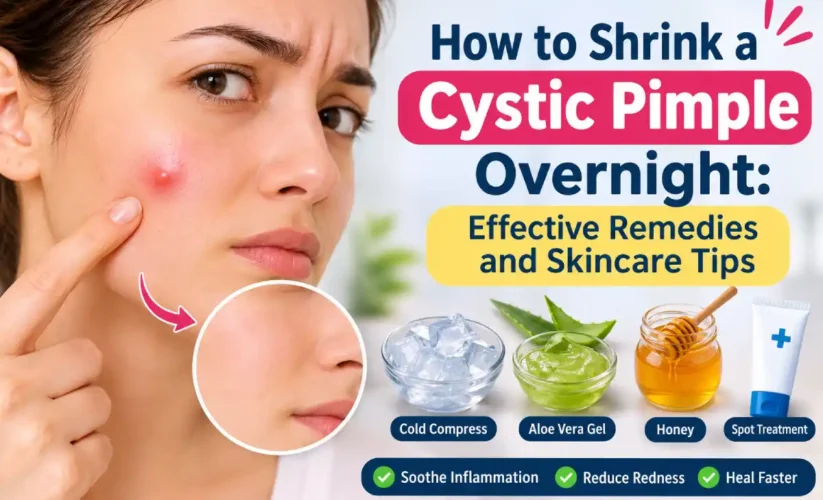
How to Shrink a Cystic Pimple Overnight: Effective Remedies and Skincare Tips
A cystic pimple may be painful and inflamed, and more difficult to treat than typical pimples, especially if you have an event coming up and want to look your best. If you’re wondering how to shrink a cystic pimple overnight naturally, it’s important to understand that cystic acne develops deep beneath the skin’s surface and can be more stubborn to treat with typical spot treatments. This bump is tender to touch, red and inflamed for many weeks. You can try and use some gentle skincare or soothing products to ease the swelling.
You won’t wake up in the morning and banish a cystic pimple, but there are things that are going to make it less inflamed (at least for a little while), reduce its redness, and help to downsize it (a little). With the right ingredients (and steering clear of what harms), you can healing with greater ease.
In this article, let’s learn about the usual causes, easy cures, and skincare tips that can help to get rid of cystic pimples.
What Is a Cystic Pimple?
A cystic pimple is an inside acne kind that occurs beneath the skin. It’s typically the scale of a bigger, painful lump with out a white head.
Most of the breakouts can typically be found on your face, chin, jawline, chest, shoulders and back. Deeper types of pimples can lead to scarring that can be permanent unlike the superficial ones.
What Causes Cystic Pimples?
Several factors contribute to the development of cystic acne.
| How It Affects the Skin | Cause |
| Cutibacterium acnes can contribute to inflammation | Bacterial activity |
| Increases the likelihood of clogged pores | Excess oil production |
| Can increase susceptibility to persistent acne | Genetics |
| Increase oil production and trigger breakouts | Hormonal changes |
| Accumulate inside hair follicles and contribute to blockages | Dead skin cells |
| Causes swelling, redness, and tenderness | Inflammation |
Understanding these causes helps you select treatments that target acne rather than simply drying out the affected area.
Types of Cystic Pimples
Cystic acne may be found in any area or on a patch of the skin, and may look different based on how deep the skin inflammation is, how bad the condition is and the area it affects.
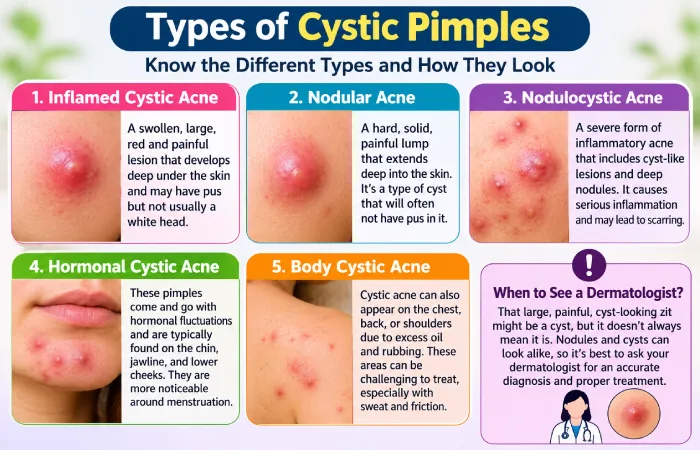
1. Inflamed Cystic Acne: An inflammatory cystic acne is something that is swollen, large, red and painful lesion which develops deep under the skin and may have puss but not usually a white head.
2. Nodular Acne: A nodule is a hard, solid, painful lump that extends deep into the skin. It’s a type of cyst that will often not have pus in it. It can take weeks for a nodule to heal.
3. Nodulocystic Acne: This is a type of acne that is a very serious condition of inflammatory acne that comprises of cyst-like lesions and deep nodules. It causes serious inflammation and there is a high likelihood of scarring when the acne heals.
4. Hormonal Cystic Acne: These little suckers come and go with hormonal fluctuations and are typically discovered to live all over the chin, jawline, as well as lower cheeks. They are commonly a whole lot much more noticeable around the menses as well as hormonal alterations.
5. Body cystic acne: The body areas deep enough for cystic acne form on your chest, back or shoulders because of excess oil and rubbing. Typically the most difficult areas for acne on the body to get control of are the places that receive lots of movement and sweating.
That massive, painful, cyst-looking zit would possibly really be a cyst, however it does not need to be. Nodules and cysts could appear alike, so be sure to ask your dermatologist to determine if you want therapy.
How to Shrink a Cystic Pimple Overnight: Effective Methods
If you’re curious to learn how to shrink a cystic pimple overnight, the first thing you should know is to minimize the break out of the bacteria instead of attempting to squish the pimple. These techniques can help diminish the pimple’s pain and visibility.
1. Use a Cold Pack for Swelling
Use a cold pack to help with swelling, redness and pain.
Wrap a cool towel around a pack of ice and place it on the knee for a few minutes. Remove it, rest for a moment, then repeat. Never put ice directly on the skin.
2. Use a Spot Treatment of Benzoyl Peroxide
Benzoyl peroxide is a tried and true acne fighting ingredient that can reduce bacteria on skin that causes acne and help you get a handle on inflamed blemishes.
Use a light film of a low-power product following the directions. Do not overapply as this can lead to dryness, redness, and peeling.
3. Try Salicylic Acid for Pores that are Clogged
Salicylic acid is a BHA. This particular BHA is able to eliminate dead skin cells and clear out any pores. When it comes to the control of blackheads, whiteheads and repeat pore-clogging, this is the BHA to use.
But it can’t get rid of a deep cystic bump right away.
4. Use a Mild Moisturiser
Your acne medication can make your skin feel irritated and dry. Use a non-fragranced, non-comedogenic moisturiser that is not too heavy and contains ingredients such as glycerin, ceramides or hyaluronic acid.
A strong skin barrier supports hydration and boosts your tolerance to acne medications.
5. Try a Hydrocolloid Pimple Patch
These patches are great for extracting fluid from blemishes and discouraging contact and picking.
They’re most effective on pimples with a visible plug or whitehead. Deep cystic bumps don’t always react so well since they’re deeper under the skin.
6. Try a Warm Compress
Use a clean washcloth soaked in tepid water and hold it on the sore for 10-15 minutes. Do this up to three times a day. Switch to a fresh, clean cloth each time and don’t squeeze the pimple.
What ingredients help to reduce cystic acne?
Various ingredients are more focused on different issues with acne. Selecting an ingredient based on your needs can help you develop a stronger skincare regimen.
| Ingredient | Main Function | Suitable For |
|---|---|---|
| Benzoyl peroxide | Reduces acne-causing bacteria | Inflammatory acne |
| Salicylic acid | Helps unclog pores | Blackheads and clogged pores |
| Adapalene | Prevents clogged pores and treats acne | Recurring breakouts |
| Azelaic acid | Reduces inflammation and dark marks | Acne-prone skin |
| Niacinamide | Supports the skin barrier | Redness and excess oil |
| Hydrocolloid | Absorbs fluid from surface blemishes | Superficial pimples |
Introduce active ingredients one at a time rather than a batch of potent products.
How To Shrink A Cystic Pimple Overnight: An Easy Night Time Routine
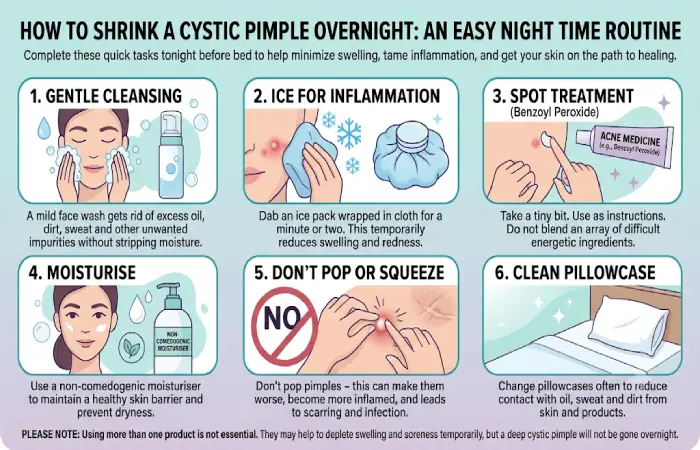
Complete these quick tasks tonight before bed to help minimize swelling, tame inflammation, and get your skin on the path to healing.
A mild face wash is great for getting rid of all the excess oil, dirt, sweat and other unwanted impurities on your face without taking away the moisture and leaving your skin dry.
Dab an ice pack that has been wrapped in a soft cloth on the pimple or area that is covered with pimples for a minute or two. This will temporarily reduce the swelling and redness of the pimple.
Take a tiny bit of benzoyl peroxide or the acne medicine noted on the ingredients checklist and also use as instructions. Do not blend an array of difficult energetic ingredients all at once.
If not, at least use a non-comedogenic moisturiser on your skin to maintain a healthy skin barrier and prevent dryness of acne medications.
Don’t squeeze or pop pimples – this can cause the pimple to worsen, become more inflamed, and leads to scarring and infection.
Sleep on a Clean Pillowcase: Make sure to change pillowcases often, as this helps to reduce the friction that comes in contact with all the oil, sweat and dirt from skin care products.
Please note: Using more than one product is not essential. They may help to deplete swelling and soreness temporarily, but a deep cystic pimple will not be gone overnight.
Additional Tips to Prevent Cystic Pimples
In addition to topical remedies, things you do to your skin every day may also help ease irritation and control forming pimples.
| Skincare Habit | Why It Matters |
|---|---|
| Avoid popping pimples | Reduces the risk of scarring and infection |
| Wash your face twice daily | Removes excess oil and impurities |
| Use non-comedogenic products | Helps reduce pore blockage |
| Change pillowcases regularly | Minimises contact with accumulated residue |
| Apply SPF 30 or higher | Helps protect skin from UV damage |
| Remove makeup before sleeping | Prevents unnecessary product buildup |
| Avoid harsh scrubs | Protects the skin barrier |
When Should You See a Dermatologist?
Deep, painful acne lesions may require professional treatment, particularly when they occur repeatedly or leave scars.
A dermatologist may recommend prescription medications depending on the severity of the breakout. For a particularly large and painful acne lesion, an intralesional corticosteroid injection may help reduce inflammation more quickly.
| Warning Sign | Recommended Action |
|---|---|
| Multiple deep, painful pimples | Consult a dermatologist |
| Acne that repeatedly returns | Seek professional evaluation |
| Breakouts leaving permanent scars | Discuss treatment options |
| Persistent swelling and discomfort | Get medical advice |
| Acne not responding to regular treatment | Consider prescription treatment |
Never attempt to drain or inject a cystic pimple yourself.
Conclusion
Dealing with cystic acne isn’t something that can be achieved immediately and so patience, patience and some patience is what you need. You can’t always expect that deep pimple to go away just yet but a cold pack, the correct acne products and a light moisturising should help with the swelling and pain.
Don’t squeeze, scrub or pile on multiple products onto the same spot. If you have painful breakouts that leave scars, seek the advice of a dermatologist. Acne can be a pain, but you can still look your best.
FAQs
What is best benzoyl peroxide or salicylic acid?
Benzoyl peroxide targets the bacteria that is responsible for causing the breakouts. Salicylic acid clears up the pores. Either of these ingredients may be able to treat the acne but neither one is going to get rid of those large cystic pimples in one night.
Does toothpaste dry out a cystic pimple?
A: No, it’s not. The ingredients in toothpaste can cause irritation to your skin, resulting in redness, dryness and peeling.
Is it safe to put a pimple patch on cystic acne?
Yes, but while these patches can prevent you from touching or picking, it works well on surface pimples but less so on deeply rooted cystic acne.