Cystic Acne Treatment: Effective Ways to Manage Deep, Painful Acne
Blackheads and deep, painful acne can be quite difficult to treat alone using your standard face wash and spot treatments. Deep, painful, inflamed pimples – that can sometimes be sore – can appear beneath the skin and cause scarring if not treated properly.
The preferred treatment will vary according to how severe the breakout is, your skin type, your past medical history, and if you’ve ever responded to a medication previously.
What Makes Cystic Acne Difficult to Treat?
Another acne of the skin type is referred to as cystic acne. This type of acne affects the deeper layer of the skin and often don’t respond immediately to topical spot treatments applied directly on the individual acne cysts. Causes include: too much oil, Clogged follicles and excess oil. hormonal fluctuations, heredity, inflamation.
Top Cystic Acne Remedies
Different treatments target different causes of acne.
| Treatment | How It Works | Best Use |
|---|---|---|
| Benzoyl peroxide | Reduces acne-causing bacteria | Inflammatory acne |
| Adapalene | Helps prevent clogged pores | Recurring acne |
| Salicylic acid | Removes dead skin cells | Clogged pores |
| Azelaic acid | Helps reduce inflammation and dark marks | Acne-prone skin |
| Oral antibiotics | Diminish bacteria activity and swelling | Moderate-to-severe cases |
| Isotretinoin | Acts on multiple acne pathways | Severe or resistant to traditional treatments acne |
1. Benzoyl Peroxide
Benzoyl Peroxide Acne fades if bacteria are killed, and benzoyl peroxide destroys the bacteria that causes acne. It’s available in different strengths. The right formula should be used, and the instructions on the product must be followed. When used in washing, benzoyl peroxide is a drying, irritating substance to the skin and may stain towels or clothes.
2. Topical Retinoids
Adapalene and prescription retinoids reduce the number of clogged pores.
They tend to use regularly, rather than providing instant results. Topical retinoids should be avoid in pregnancy unless instructed to do so by an appropriately qualified health professional.
3. Salicylic Acid
Salicylic acid is able to exfoliate the dead skin cells and clears the pore openings. It can be helpful for people who have a combination of whiteheads, blackheads and pustules.
But it is not an independent treatment for deep severe acne.
4. Azelaic Acid
Azelaic acid is a treatment for acne, and it is also effective for helping to fade hyperpigmentation following an area of inflammation. It is a good option if you do not tolerate some of the more aggressive acne medications.
Professional Treatments for Severe Acne
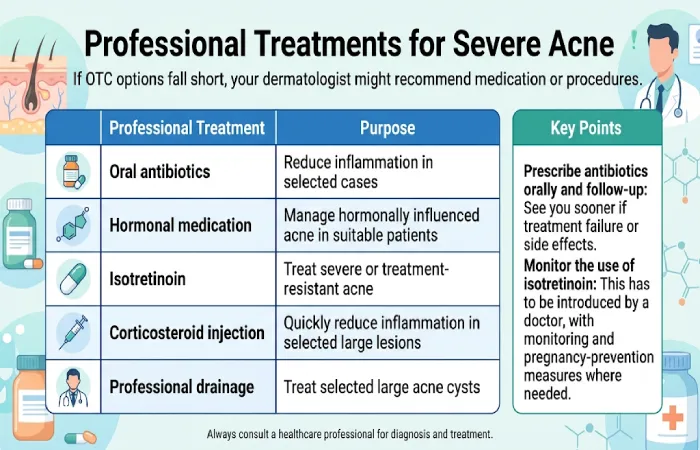
If OTC options fall short, your dermatologist might recommend medication or procedures.
| Professional Treatment | Purpose |
|---|---|
| Oral antibiotics | Reduce inflammation in selected cases |
| Hormonal medication | Manage hormonally influenced acne in suitable patients |
| Isotretinoin | Treat severe or treatment-resistant acne |
| Corticosteroid injection | Quickly reduce inflammation in selected large lesions |
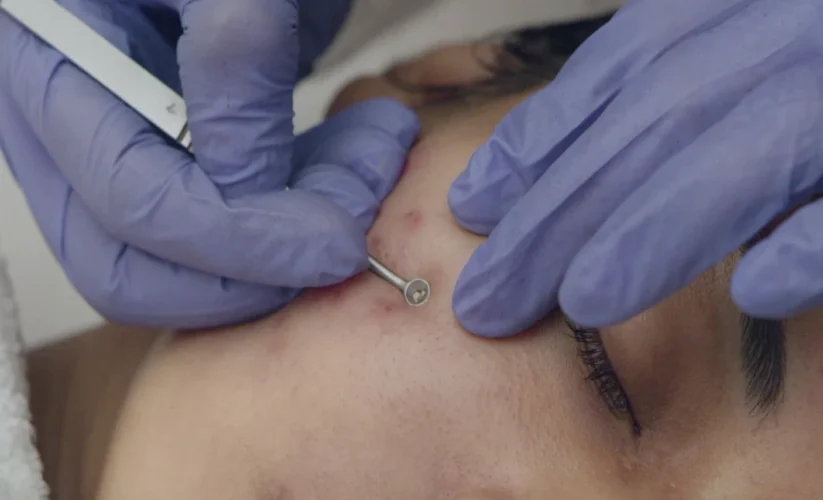
| Professional drainage | Treat selected large acne cysts |
Prescribe antibiotics orally and follow-up: See you sooner if treatment failure or side effects. Monitor the use of isotretinoin: This has to be introduced by a doctor, with monitoring and pregnancy-prevention measures where needed.
Daily Skincare Routine for Acne-Prone Skin
A gentle routine can support medical treatment.
Morning:
Wash with a gentle cleanser.
Apply a suitable acne treatment if recommended.
Use a lightweight moisturiser.
Tear with broad-spectrum SPF 30 or greater.
Evening:
Remove makeup and sunscreen.
Cleanse gently.
Apply your prescribed acne treatment.
Use a non-comedogenic moisturiser.
Do not mix combinations of multiple strong active ingredients without advice from a professional.
Common Treatment Mistakes to Avoid
| Mistake | Why to Avoid It |
|---|---|
| Popping deep pimples | Increases scarring risk |
| Using too many active ingredients | Can damage the skin barrier |
| Scrubbing frequently | Worsens irritation |
| Stopping treatment too early | Prevents consistent acne control |
| Using unprescribed antibiotics | Can contribute to antibiotic resistance |
| Skipping moisturiser | Can worsen treatment-related dryness |
Conclusion
Your right cystic acne remedies are going to rely upon how serious your condition is, as well as what has caused it. Some ingredients, like retinoids, benzoyl peroxide and other over-the-counter medications, may be effective in mild cases; however, for more serious cystic acne, a prescription is likely necessary. The right dermatologist can work with you to come up with a treatment plan that takes care of your inflammation and helps to limit scarring.
For instant help for your skin, check out our pillar guide on how to shrink a cystic pimple overnight.
FAQs
1. What is the best cure for cystic acne?
Treatment varies by severity. In various cases, topical retinoids, benzoyl peroxide, oral medication, or isotretinoin is suggested.
2. Can cystic acne be treated at home?
Mild cases of acne usually can be treated with proper skin care products. For deeper and painful forms of lesions, you may require the help of a doctor.
3. Can benzoyl peroxide use for cystic acne?
It has the ability to treat inflammatory acne by killing the bacteria associated with acne, but may not have the ability to treat a cyst.
4. How long does cystic acne treatment take?
Most of the topical acne medications take weeks to treat. Depending on the severity of your condition, it can take months of treatment.
5. Does cystic acne leave permanent scars?
Yes. Deep inflammatory acne can scar your skin around the area.