
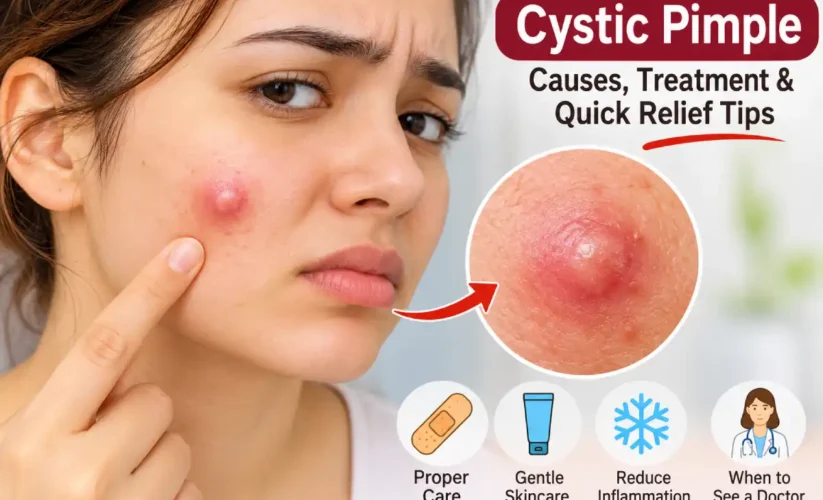
Cystic Pimple: Causes, Symptoms, Types and Treatment
A deep, painful bump beneath the skin can be more than an ordinary breakout. A cystic pimple develops when inflammation affects a clogged hair follicle deep within the skin. Unlike regular pimples, these bumps can be larger, more painful, and slower to heal.
By understanding what causes them, the symptoms and the treatments, you will be able to better manage the breakouts and reduce the chances of scarring.
What Is a Cystic Pimple?
Cystic pimples are inflamed pimples that form beneath the surface of the skin and that may contain pus. They are usually giant, painful bumps that are swollen and frequently don’t have a whitehead.
Most common sites of lesion: Face, chin, jaw line, chest, shoulders and back.
How Does It Develop?
Usually, there are several steps, such as:
Excess oil accumulates inside a hair follicle.
Dead skin cells clog the pore.
The follicle becomes inflamed.
The surrounding skin develops swelling and tenderness.
Fresh deep acne lesion beneath the skin.
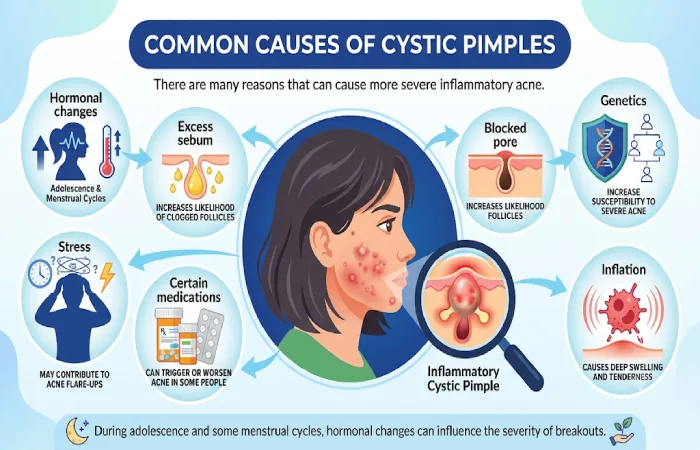
Common Causes of Cystic Pimples
There are many reasons that can cause more severe inflammatory acne.
| Cause | Effect on Skin |
|---|---|
| Excess sebum | Increases the likelihood of clogged follicles |
| Hormonal changes | Stimulate oil production |
| Genetics | Increase susceptibility to severe acne |
| Inflammation | Causes deep swelling and tenderness |
| Certain medications | Can trigger or worsen acne in some people |
| Stress | May contribute to acne flare-ups |
During adolescence and some menstrual cycles, hormonal changes can influence the severity of breakouts.
Symptoms to Recognise
A cystic pimple can also present itself and get larger gradually and sometimes bigger when the spread of inflammation increases. The signs or symptoms may vary depending on the size and depth of the affected area.
Top signs to watch for are:
The site may become sore or tender, particularly on contact or when washing the face.
Many deep acneic lesions can be felt as hard or swollen bumps that lack a head.
Discolouration of skin: there may be redness, pinkness or darkening of skin.
The skin around the bump may be swollen, sore and tender.
Frequent breakouts: Several deep pimples may develop in the same region – especially around your chin and jaw.
When the inflammation subside, some skin tissue at the site of the original pustule can become dark, rough or scar.
By noticing these symptoms on time, you will be able to prevent yourself from scratching and irritating the affected part of skin and get an idea when professional acne skin treatment is needed.
Types of Deep Inflammatory Acne
Not every deep acne bump is technically a cyst. The main forms include:
| Type | Appearance | Main Characteristics |
|---|---|---|
| Acne nodule | Hard, deep lump | Usually solid and painful |
| Acne cyst | Deep, swollen lesion | Contains pus or fluid |
| Nodulocystic acne | Multiple deep lesions | Severe inflammatory acne |
| Inflammatory papule | Small raised bump | Red and usually without pus |
| Pustule | Raised bump with a white centre | Contains visible pus |
How to Treat a Cystic Pimple
Treatment options will vary depending on the frequency of and severity of your breakouts.
1. Implement Appropriate Acne-Fighting Components
Benzoyl peroxide is effective at reducing bacteria that causes acne while topical retinoids like adapalene can help prevent a clog from forming in the pores.
Salicylic acid can also be used to help with blocked pores, and basic acne.
2. Use a Cold Compress
Cold compression can be used to temporarily reduce swelling and pain. Wrap an ice bag in a paper or plastic bag and apply to skin for a short time.
3. Use a Mild Skincare Routine
Use gentle moisturiser and non-comedogenic sun protection with mild cleanser. Don’t scrub and don’t use harsh exfoliants.
4. Contact a Dermatologist
Medical treatment is required if the acne is resistant to treatment or appears in large numbers. The acne dermatologist provides a drug treatment plan, which may be oral medication, retinoids prescribed or corticosteroid injections for sensitive spots.
When Should You Seek Medical Advice?
A handful of deep acne scars will eventually resolve on their own, so don’t hesitate to see your dermatologist for painful, deep cystic pimples. Don’t let the fear of making your skin worse or doing damage in the long run stop you from getting the treatment you need.
Consider seeking professional advice if you experience the following:
Getting worse: the bump begins to hurt more or grow larger.
Even with regular cleansing and dry skin care, painful breakouts are emerging.
There are pockmarks, bumps, or other long term differences.
Affected areas: Several areas of your face, chest, shoulders, or back.
No change despite use of normal acne skincare: You are using the right OTC acne treatments but no effect.
You start to lose confidence or become inhibited in social interactions or activities.
The dermatologist can evaluate the skin to see if the individual needs a prescription. Treatment may be done with an oral, topical retinoid, or an injection that will relieve the pain in the painful lesion in severe cases.
Important: visit your doctor if the skin around the spot grows hotter or inflamed quickly, or if it is very painful or hot to the touch, especially if you have a fever. You could have an infection or another condition.
Conclusion
Cystic pimple Cystic pimples are a severe type of inflammatory pimple that can be painful, swollen and scar your skin. If you experience common pimples symptom such as- pain and swelling that refuse to go away or Pimple that come back again and again- there is a chance that your skin needs extra attention! You may be able to treat this mild acne with a gentle skincare routine.
Do not squeeze or break open deep cysts, as this will make inflammation worse and can lead to a permanent scar. For further breakouts or more severe breakouts, see your doctor or dermatologist.
FAQs
1. Is a cystic pimple the same as a regular pimple?
No. A classic pimple is likely to be pushed more toward the surface of the skin, while a cystic acne lesion usually is pushed deeper toward the brain and definitely can be more painful.
2. How quickly do cyst pimples heal?
Very inflamed acne nodules or cysts may take weeks or even more than a month to go away but this varies according to the severity and the treatment.
3. Can cystic pimple clear on its own?
Some lesions disappear on their own. However, if they are deep or persistent, the patient should be seen by a dermatologist to minimize the risk of scarring.
4. Is it OK to pop an deep zit?
Q. Can I.. Squeeze or stab it? A. No, this could make the inflammation worse, cause further infection, or leave you with a scar.
5. What is the fastest way to get rid of a painful cyst?
In some cases, a dermatologist may recommend injecting an intralesional corticosteroid to large, localized lesions to get rid of any inflammation and pain.