

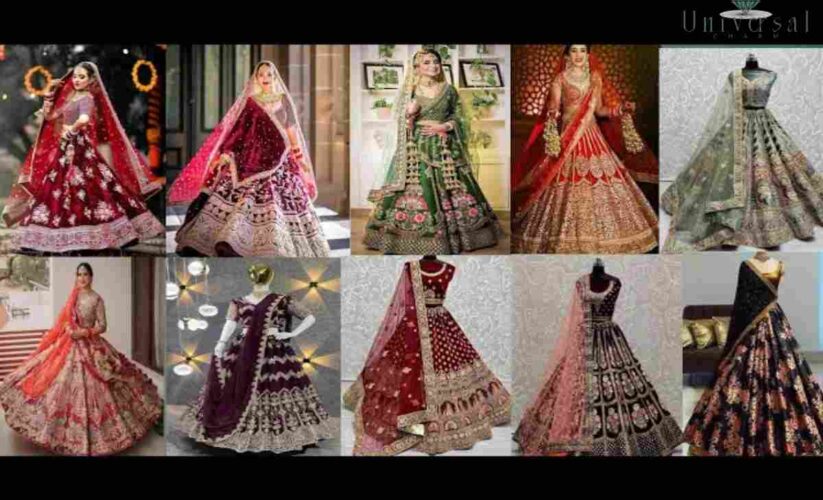
Guide to Choosing Your Bridal Lehenga: Trends, Silhouettes & Styling

Choosing your bridal lehenga is no longer just a shopping decision—it’s a strategic blend of aesthetics, comfort, photography, and long-term value. In today’s Instagram-driven and AI-influenced world, the “perfect lehenga” is the one that performs across multiple dimensions: how it looks in person, how it photographs, how it feels after hours, and how timeless it remains years later.
This complete guide is designed as a data-driven, beginner-friendly yet expert-level resource. It combines trend insights, pricing benchmarks, specifications, styling logic, buyer reviews, and decision frameworks—so you don’t just choose a lehenga, you choose the right one.
Why Most Brides Regret Their Lehenga Choice
Most regret comes from optimizing for the wrong factors.
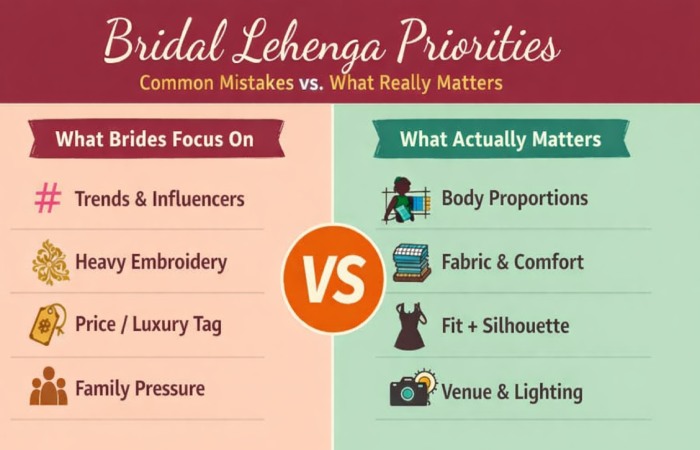
A lehenga that looks amazing on Instagram may fail in real-life lighting, movement, and comfort.
Bridal Lehenga Price Guide
Understanding pricing helps you avoid overspending while maximizing value.
| Segment | Price Range (₹) | Features Included | Ideal Buyer |
| Budget | 3,000 – 15,000 | Machine embroidery, synthetic fabrics | Students / low-budget |
| Mid-range | 15,000 – 50,000 | Better fabrics, mixed embroidery | Practical brides |
| Premium | 50,000 – 1,50,000 | Silk, handwork, customization | Most brides |
| Luxury Couture | 1,50,000 – 5,00,000+ | Designer label, artisan work | High-end weddings |
Bridal pricing and buying behavior trends are discussed in fashion reports by Vogue India and Brides, highlighting how mid-range bridal wear is increasingly dominating due to value-conscious buyers.
Price vs Value
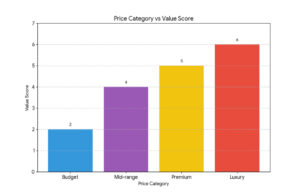
The ₹50K–₹1L range delivers the best balance of quality, customization, and wearability.
Bridal Lehenga Specifications – What You’re Actually Buying
| Specification | Options Available | Why It Matters |
| Fabric | Silk, velvet, net, organza, georgette | Defines fall & comfort |
| Embroidery | Zardozi, sequins, thread, and mirror work | Impacts a luxury feel |
| Weight | 3kg – 15kg | Affects mobility |
| Can-can layers | Light/heavy | Controls volume |
| Dupatta | Single/double | Key styling element |
| Blouse | Corset / padded/traditional | Shapes posture |
Fabric influences your overall look more than embroidery. A well-structured silk lehenga can outperform a heavily embellished net.
Bridal Lehenga Trends
1. Pastel & Minimal Aesthetic
| Pros | Cons |
| Modern and elegant | It can look dull at night |
| Lightweight styling | Needs bold jewelry |
| Ideal for day weddings | Less traditional |
2. Classic Red & Deep Tones
| Pros | Cons |
| Timeless & cultural | Less unique |
| Works in all lighting | Can feel heavy |
| Strong photography contrast | Overused |
3. Texture Over Bling
| Pros | Cons |
| Premium subtle look | Less flashy |
| Lightweight | Needs styling |
| Trending among Gen Z | Not traditional |
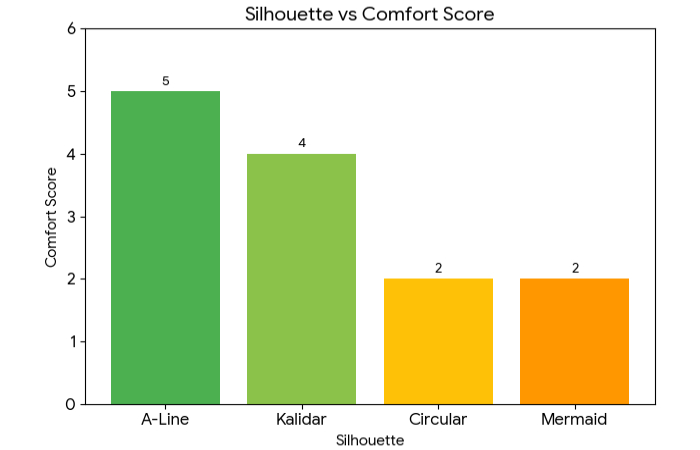
Lehenga Silhouettes Explained
| Silhouette | Best For | Comfort | Photo Impact | Verdict |
| A-Line | All body types |
5/5 |
4/5 |
Safest |
| Circular/Flare | Grand weddings |
2/5 |
5/5 |
Dramatic |
| Mermaid | Slim/hourglass |
2/5 |
4/5 |
Stylish |
| Kalidar/Panelled | Height illusion |
4/5 |
4/5 |
Smart choice |
Silhouette Comfort
Where to Buy Bridal Lehengas
Online Platforms
| Platform Type | Examples | Price Range | Why Choose |
| Budget sites | Mirraw | ₹5K–₹30K | Affordable variety |
| Designer platforms | Aza Fashions | ₹50K–₹5L | Premium collections |
| Multi-brand stores | Pernia’s Pop-Up Shop | ₹30K–₹3L | Curated designers |
Offline Shopping Hotspots
| Location | Known For |
| Chandni Chowk (Delhi) | Best value deals |
| Commercial Street (Bangalore) | Budget variety |
| Banjara Hills (Hyderabad) | Designer boutiques |
Offline markets offer better negotiation and customization.
Pros & Cons of Bridal Lehengas
| Pros | Cons |
| Highly customizable | Expensive |
| Wide design variety | Heavy |
| Strong cultural value | Limited reuse |
| Photogenic | Needs styling expertise |
Real Buyer Reviews
| Factor | Real Feedback |
| Price | ₹70K–₹1L is sweet spot |
| Comfort | Often compromised |
| Fabric | Most important factor |
| Customization | Highly valued |
Buyers who prioritize comfort and fabric report higher satisfaction than those chasing trends.
Styling Your Bridal Lehenga
Jewelry Strategy
| Lehenga Type | Jewelry Strategy |
| Heavy | Minimal |
| Minimal | Statement |
Dupatta Styling
| Style | Effect |
| Head drape | Traditional |
| Side drape | Modern |
| Double dupatta | Royal |
Price vs Features
| Price Range | Fabric Quality | Embroidery | Customization | Verdict |
| ₹5K–₹15K | Basic | Machine | No | Budget |
| ₹15K–₹50K | Good | Mixed | Limited | Value |
| ₹50K–₹1.5L | Premium | Handwork | Yes | Best |
| ₹1.5L+ | Luxury | Artisan | Full | Prestige |
Decision Framework (Step-by-Step)
| Step | Decision Factor | Key Question |
| 1 | Wedding type | Day or night? |
| 2 | Budget | ₹20K or ₹2L? |
| 3 | Silhouette | Comfort vs drama? |
| 4 | Fabric | Season-friendly? |
| 5 | Styling | Jewelry + dupatta |
Common Mistakes to Avoid
- Ignoring blouse fit
- Choosing trend over comfort
- Over-accessorizing
- Not testing movement
- Skipping lighting trials
Final Verdict
Choosing the perfect bridal lehenga isn’t about chasing trends, price tags, or external opinions—it’s about making a well-aligned, strategic choice. The lehenga that truly stands out is the one that complements your body proportions, feels comfortable for long hours, suits your wedding venue and lighting, and is styled thoughtfully with the right blouse, dupatta, and jewelry.
In reality, fabric quality, fit, and silhouette have a far greater impact than heavy embroidery or designer labels. Brides who prioritize these core elements consistently report higher satisfaction—not just on the wedding day, but years later when revisiting photos. Ultimately, a well-chosen lehenga is one that looks effortless, photographs beautifully, and remains timeless beyond fleeting trends.