
How Tattoo Removal Can Boost Your Self Confidence

Universalcharm
- March 24, 2026
Tattoo removal is often misunderstood as a purely cosmetic decision. In reality, it sits at the intersection of identity psychology, social perception, and long-term self-confidence.
Tattoos are often created during moments of strong identity—rebellion, love, belonging, or self-expression. But identity evolves. What once felt meaningful can later feel misaligned, outdated, or even limiting. That’s where tattoo removal enters—not just as a cosmetic procedure, but as a psychological reset.
Why Tattoos Affect Confidence
| Factor | Impact on Confidence | Explanation |
| Identity mismatch | High negative impact | Tattoo reflects past identity, not current self |
| Social perception | Medium–high | Others form quick judgments based on appearance |
| Cognitive dissonance | High | Internal discomfort when identity & image don’t align |
| Self-monitoring | Medium | Constant awareness of how others perceive you |
When your outer image contradicts your inner identity, your brain experiences low-level stress and self-consciousness. It is why tattoo removal often feels like relief, not just change.
How Tattoo Removal Boosts Self-Confidence
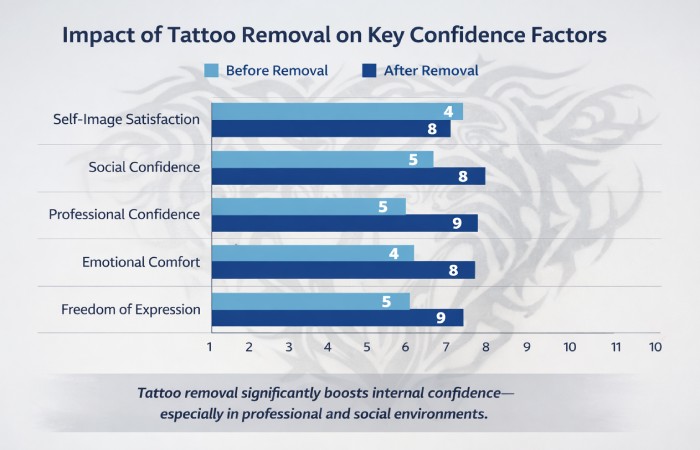
1. Regaining Control Over Your Appearance
| Before Removal | After Removal |
| Feeling stuck with past decisions | Feeling in control of your image |
| Avoiding certain outfits | Wearing anything confidently |
| Hiding tattoos | Expressing freely |
Confidence grows when your appearance feels intentional, not accidental.
2. Reduced Social Anxiety & Judgment Sensitivity
Even subtle judgment (real or perceived) can create mental fatigue. Tattoo removal reduces this invisible cognitive load.
| Situation | With Visible Tattoo | After Removal |
| Job interview | Overthinking appearance | Focus on skills |
| Social events | Self-consciousness | Natural interaction |
| Client meetings | Perception management | Authentic presence |
3. Career Opportunities & Professional Image
| Industry | Tattoo Acceptance Level | Impact |
| Creative fields | High | Minimal impact |
| Corporate/finance | Medium–low | Can influence perception |
| Government/defense | Low | Often restricted |
| Hospitality/aviation | Low | Strict grooming norms |
Even today, appearance bias still exists in hiring decisions. Removing tattoos can remove friction—not change your ability, but how it’s perceived.
4. Emotional Closure & Letting Go
| Tattoo Type | Emotional Effect |
| Ex-relationship tattoos | Lingering emotional attachment |
| Impulsive tattoos | Regret or embarrassment |
| Phase-based tattoos | Identity conflict |
Removal acts as:
-
- A symbolic reset
- A psychological closure
- A fresh identity alignment
It’s not erasing history—it’s editing your narrative.
5. Improved Body Image and Self-Perception
Body image isn’t just about attractiveness—it’s about alignment.
Unwanted tattoos can:
- Draw attention away from features you like
- Create visual clutter or imbalance
- Make you feel “stuck” in an old version of yourself
After removal, many report:
- Feeling “cleaner” or more authentic
- Increased willingness to wear what they want
- Higher comfort in their own skin
You move from hiding parts of yourself → expressing yourself freely.
The Tattoo Removal Process
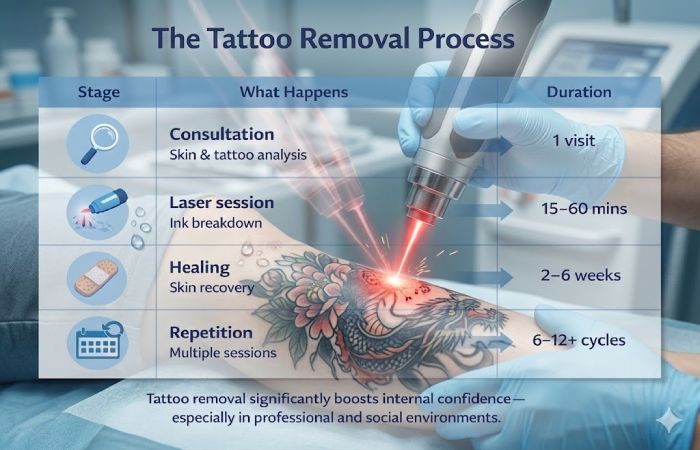
How it works:
- Laser breaks ink into particles
- The body removes ink via the immune system
- Multiple sessions required
Clinical Facts:
- Typically, 6–12+ sessions needed
- Sessions spaced weeks apart for healing
- Pain is manageable (rubber-band sensation)
Tattoo Removal Process
Pricing of Tattoo Removal – India + Global
India Cost Breakdown
| Tattoo Size | Cost per Session | Total Cost |
| Small | ₹2,000 – ₹5,000 | ₹25,000 – ₹50,000 |
| Medium | ₹5,000 – ₹10,000 | ₹40,000 – ₹80,000 |
| Large | ₹10,000 – ₹15,000+ | ₹80,000 – ₹1,50,000+ |
Average total cost: ₹25,000 to ₹1,00,000
Global Pricing Snapshot
| Country | Per Session | Total (8–10 sessions) |
| USA | $200 – $400 | $2,000 – $4,000 |
| UK | £90 – £150 | £900 – £1,500 |
| Europe | €60 – €170 | €600 – €1,700 |
Specialists Who Perform Tattoo Removal
| Specialist Type | Role | Advantage |
| Dermatologists | Medical experts | Safer for complex skin types |
| Laser technicians | Operate laser devices | Cost-effective |
| Cosmetic surgeons | Surgical removal | Suitable for small tattoos |
| Aesthetic clinics | Combination services | Flexible packages |
Consult certified professionals via dermatology associations like the American Academy of Dermatology Tattoo Removal Guide
Where Can You Get Tattoo Removal?
| Location Type | Availability |
| Dermatology clinics | Widely available |
| Cosmetic/aesthetic clinics | Highly accessible |
| Hospitals (government/private) | Limited but affordable |
| Specialized laser centers | Advanced technology |
Government hospitals in India have even started free tattoo removal services in some cases.
Country-Wise Availability
| Region | Availability Level | Notes |
| India | High (urban areas) | Affordable, growing demand |
| USA | Very high | Advanced tech (Picosecond lasers) |
| UK/Europe | High | Regulated clinics |
| Middle East | Medium–high | Premium pricing |
| Southeast Asia | Growing | Cost-effective options |
Who Benefits Most from Tattoo Removal?
| Category | Confidence Impact |
| Career changers | Very high |
| People with visible tattoos | High |
| Emotional attachment tattoos | High |
| Casual/regret-free tattoos | Low–medium |
Risks & Reality Check
| Risk | Probability | Prevention |
| Skin discoloration | Low–medium | Experienced specialist |
| Scarring | Rare | Proper aftercare |
| Incomplete removal | Common | Realistic expectations |
Laser removal is considered safe and effective when done by professionals.
Community Perspectives
From Reddit Discussions:
“A full sleeve can take years… 15–20 sessions”
“Costs depend on size, colors, and clinic expertise.”
Community Insight
Real users emphasize patience and choosing the right clinic.
| Concern | Reality |
| “It’s quick.” | No, it’s a long process |
| “One session is enough.” | False |
| “Cheap clinics are fine” | Risky for skin damage |
| “Results are instant” | Gradual fading |
Reviews: What People Actually Experience
| Aspect | Positive Reviews | Negative Reviews |
| Results | Noticeable fading | Not always 100% removal |
| Confidence | Major boost | Slow progress frustration |
| Pain | Tolerable | Sensitive areas hurt |
| Cost | Worth it long-term | Expensive upfront |
Conclusion
Tattoo removal can be a powerful catalyst for rebuilding self-confidence—not because it changes who you are, but because it realigns how you present yourself with who you’ve become. When an outdated or unwanted tattoo creates internal conflict, social hesitation, or professional friction, removing it often restores a sense of control, clarity, and authenticity.
However, its true value lies in personal intention: when done for self-alignment rather than external pressure, tattoo removal becomes less about erasing the past and more about stepping forward with confidence, freedom, and a renewed sense of identity.