
Indian Bridal Blouse Design: Necklines to Sleeves & Back Designs

A bridal saree is often the centerpiece of traditional wedding attire, but the blouse design is what defines the overall look. The right bridal blouse can transform even a simple saree into a statement outfit, enhancing silhouette, comfort, and personal style.
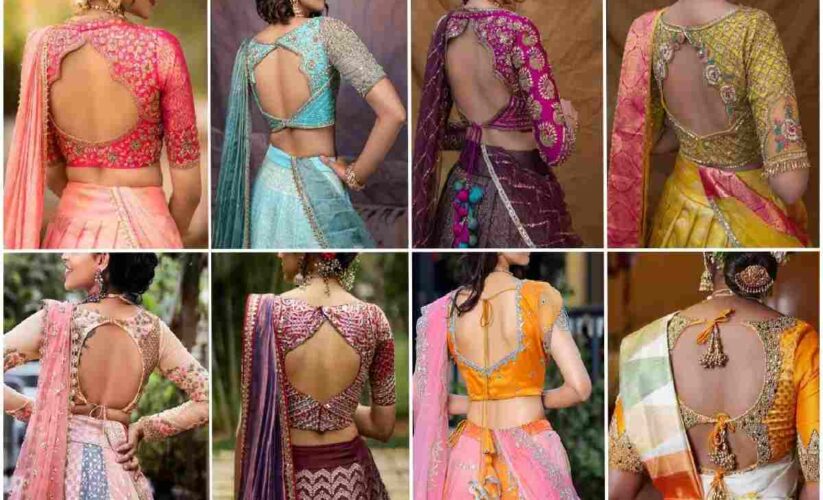
In modern weddings, bridal blouse designs have evolved far beyond basic tailoring. Brides now choose from embroidered masterpieces, backless designs, corset-style blouses, cape blouses, and contemporary cuts that blend tradition with fashion trends.
Why Bridal Blouse Design Matters More Than the Saree
Many stylists agree that the blouse often determines how elegant the saree looks. A well-designed blouse can:
- Add structure and shape to the outfit
- Highlight the bride’s jewelry and neckline
- Create visual balance with the saree fabric
- Reflect personal style and cultural traditions
Fashion designers frequently emphasize that a carefully crafted blouse can elevate even a minimal saree, while a poorly designed blouse can make an expensive saree look ordinary.
From a styling perspective, the blouse functions like the architectural framework of a saree ensemble.
Evolution of Bridal Blouse Designs Over Time
| Era | Key Fashion Characteristics | Materials Used | Influence |
| Ancient India (300 BCE) | Breast bands or minimal upper garments | Cotton, silk | Temple sculptures |
| Medieval Period | Early stitched cholis | Cotton, silk | Regional tailoring |
| Mughal Era | Embroidery, fitted bodices | Brocade, silk | Persian influence |
| Colonial Period | Blouse + saree styling | Muslin, cotton | Victorian fashion |
| Modern Era | Designer bridal blouses | Velvet, net, satin | Global fashion |
Bridal Blouse Price Worldwide
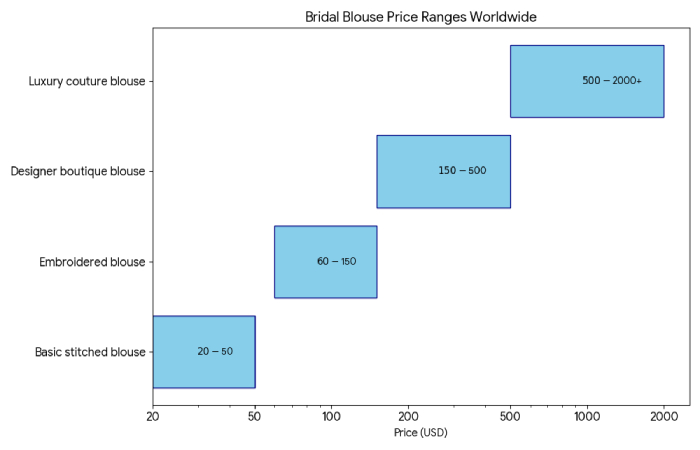
The cost of a bridal blouse varies based on fabric, embroidery, and designer brand.
| Category | Price Range |
| Basic stitched blouse | $20 – $50 |
| Embroidered blouse | $60 – $150 |
| Designer boutique blouse | $150 – $500 |
| Luxury couture blouse | $500 – $2000+ |
In countries like India, many brides choose custom-stitched blouses from local tailors, while international buyers often purchase from online ethnic fashion stores.
Bridal Blouse Price in India
| Bridal Blouse Type | Average Price Range (INR) | Price Range (USD approx.) | Where to Buy | Notes |
| Basic Bridal Blouse (Plain Silk/Cotton) | ₹800 – ₹2,000 | $10 – $25 | Local tailors, local boutiques | Simple stitching with minimal design |
| Embroidered Bridal Blouse | ₹2,000 – ₹6,000 | $25 – $75 | Boutique stores, online ethnic shops | Threadwork, zari or small stone work |
| Zari Work Bridal Blouse | ₹3,000 – ₹8,000 | $35 – $100 | Wedding boutiques | Popular with silk and Kanjivaram sarees |
| Designer Bridal Blouse | ₹8,000 – ₹25,000 | $100 – $300 | Designer stores, bridal studios | Unique cuts, premium fabrics |
| Hand Embroidered Blouse | ₹10,000 – ₹40,000 | $120 – $500 | High-end boutiques | Detailed handwork and craftsmanship |
| Bridal Corset Blouse | ₹5,000 – ₹15,000 | $60 – $180 | Designer boutiques, online stores | Structured modern style |
| Velvet Bridal Blouse | ₹4,000 – ₹12,000 | $50 – $150 | Bridal fashion stores | Popular for winter weddings |
| Heavy Stone Work Blouse | ₹6,000 – ₹20,000 | $70 – $240 | Designer boutiques | Reception or party bridal wear |
| Luxury Designer Blouse | ₹25,000 – ₹1,00,000+ | $300 – $1,200+ | Luxury bridal designers | Couture bridal collections |
| Custom Tailored Bridal Blouse | ₹2,500 – ₹10,000 | $30 – $120 | Local master tailors | Depends on design complexity |
Bridal Blouse Stitching Cost in India
| Service Type | Average Cost (INR) | Details |
| Basic stitching | ₹400 – ₹1,000 | Simple blouse stitching |
| Designer stitching | ₹1,500 – ₹4,000 | Special necklines and sleeves |
| Bridal heavy stitching | ₹3,000 – ₹8,000 | Complex embroidery work |
| Custom couture stitching | ₹10,000+ | Designer bridal tailoring |
Where to Buy Bridal Blouses?
Online Stores
| Platform | Benefits | Price Range |
| Etsy | Custom handmade designs | $50–$300 |
| Amazon | Ready-made options | $30–$120 |
| Myntra | Designer brands | $60–$250 |
| Ajio | Fashion-forward styles | $50–$200 |
Offline Options
Many brides prefer custom tailoring to match their saree perfectly.
| Store Type | Advantages |
| Local boutique | Custom tailoring |
| Designer showroom | Luxury designs |
| Bridal fashion stores | Complete wedding outfits |
| Local tailors | Affordable custom fit |
Bridal Blouse Brand Comparison
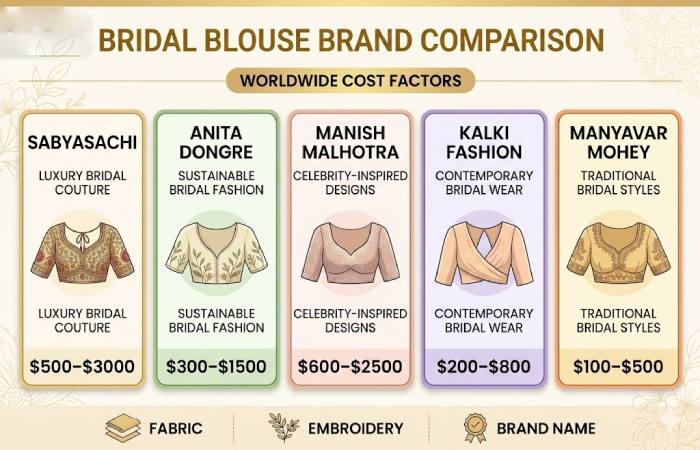
| Brand | Specialty | Price Range |
| Sabyasachi | Luxury bridal couture | $500–$3000 |
| Anita Dongre | Sustainable bridal fashion | $300–$1500 |
| Manish Malhotra | Celebrity-inspired designs | $600–$2500 |
| Kalki Fashion | Contemporary bridal wear | $200–$800 |
| Manyavar Mohey | Traditional bridal styles | $100–$500 |
Popular Bridal Blouse Designs
Below are some of the most popular bridal blouse styles chosen by modern brides. These designs dominate bridal fashion across India, South Asia, and diaspora weddings worldwide.
| Bridal Blouse Design | Key Features | Best For |
| Traditional Embroidered Blouse | Heavy zari, thread work, or stone embroidery | Silk bridal sarees |
| Backless Blouse | Deep back cut with tie strings or embellishments | Reception or modern bridal looks |
| High Neck Blouse | Full coverage with detailed embroidery | Elegant, royal wedding styles |
| Sheer Sleeve Blouse | Transparent net or organza sleeves | Contemporary bridal fashion |
| Corset Blouse | Structured, fitted bodice | Designer or fusion bridal wear |
| Cape Style Blouse | Attached cape or overlay | Fashion-forward brides |
| Boat Neck Blouse | Wide neckline with minimal cut | Brides who prefer modest styles |
Types of Bridal Blouse Design
| Bridal Blouse Design Type | Key Features | Best Paired With | Style Category |
| Traditional Zari Blouse | Heavy gold or silver thread embroidery | Silk bridal sarees | Traditional |
| Backless Blouse | Deep back cut with tie strings or tassels | Designer or lightweight sarees | Modern |
| High Neck Blouse | Closed neckline with embroidery | Heavy bridal sarees | Royal / Elegant |
| Boat Neck Blouse | Wide neckline across the collarbone | Banarasi or Kanjivaram sarees | Classic |
| Sheer Back Blouse | Transparent net back with embroidery | Contemporary bridal sarees | Modern |
| Corset Style Blouse | Structured bodice with defined waist | Designer sarees or lehengas | Fashion-Forward |
| Cape Style Blouse | Flowing cape attached to blouse | Reception sarees | Contemporary |
| Off-Shoulder Blouse | Shoulders exposed with a fitted bodice | Cocktail or reception sarees | Western Fusion |
| Elbow Sleeve Blouse | Sleeves extending to the elbow | Traditional wedding sarees | Traditional |
| Full Sleeve Blouse | Long sleeves with embroidery | Winter weddings or royal looks | Regal |
| Sleeveless Blouse | No sleeves, clean silhouette | Modern bridal sarees | Minimalist |
| Sweetheart Neck Blouse | Heart-shaped neckline | Light embroidered sarees | Romantic |
| Square Neck Blouse | Structured square neckline | Silk or brocade sarees | Classic |
| V-Neck Blouse | Deep V neckline elongates the torso | Lightweight sarees | Elegant |
| Jacket Style Blouse | Layered jacket over blouse | Bridal lehenga or saree | Indo-Western |
| Peplum Blouse | Flared waist extension | Contemporary bridal sarees | Designer |
| Velvet Bridal Blouse | Rich velvet fabric with embroidery | Winter wedding sarees | Luxury |
| Net Sleeve Blouse | Transparent sleeves with embroidery | Reception sarees | Modern |
| Mirror Work Blouse | Mirror embellishments | Festive or traditional sarees | Ethnic |
| Cutwork Back Blouse | Decorative cutout patterns | Designer sarees | Trendy |
Bridal Blouse Design vs Ready-Made Blouse
Most brides prefer custom designs because bridal sarees require precise tailoring.
| Feature | Custom Bridal Blouse | Ready-Made Blouse |
| Fit | Perfect tailoring | Standard sizing |
| Price | Higher | Affordable |
| Personalization | Fully customizable | Limited |
| Time | Takes 1–4 weeks | Immediate purchase |
Bridal Blouse Designs by Body Type
| Body Type | Recommended Bridal Blouse Designs | Avoid | Why It Works |
| Petite | Sweetheart neck, V-neck, sleeveless blouse | High neck heavy embroidery | Creates a longer silhouette |
| Pear Shape | Boat neck, full sleeve blouse | Deep back designs | Balances shoulder width |
| Apple Shape | V-neck blouse, corset blouse | Tight high-neck styles | Defines waistline |
| Hourglass | Corset blouse, sweetheart neck blouse | Loose blouse designs | Enhances natural curves |
| Athletic | Ruffle sleeve blouse, peplum blouse | Very plain designs | Adds shape and dimension |
| Broad Shoulders | Deep V-neck blouse, sleeveless blouse | Boat neck designs | Reduces the appearance of shoulder width |
| Curvy Body | Structured blouse, elbow sleeves | Very tight sleeveless blouses | Provides support and balance |
| Tall Body Type | High neck blouse, full sleeve blouse | Very small neckline designs | Maintains proportion |
Bridal Blouse Designs by Saree Fabric
| Saree Fabric | Recommended Bridal Blouse Designs | Suitable Necklines | Ideal Sleeve Styles | Why It Works |
| Silk Saree | Zari embroidered blouse, brocade blouse, elbow sleeve blouse | Boat neck, high neck, square neck | Elbow sleeves, full sleeves | Matches the rich texture and traditional bridal aesthetic |
| Banarasi Saree | Brocade blouse, contrast color blouse, high neck blouse | Boat neck, sweetheart neck, V-neck | Elbow sleeves, cap sleeves | Enhances the intricate weaving and regal appearance |
| Kanjivaram Saree | Temple design blouse, contrast silk blouse, zari work blouse | Boat neck, high collar, round neck | Elbow sleeves, half sleeves | Complements the traditional South Indian bridal look |
| Georgette Saree | Sheer sleeve blouse, backless blouse, corset blouse | Deep V-neck, sweetheart neck, halter neck | Sleeveless, sheer sleeves | Lightweight fabric pairs well with modern blouse styles |
| Chiffon Saree | Sleeveless blouse, satin blouse, minimal embroidery blouse | Sweetheart neck, V-neck, halter neck | Sleeveless, cap sleeves | Keeps the outfit elegant and flowy |
| Net Saree | Stone work blouse, pearl work blouse, embellished blouse | Deep neck, sweetheart neck | Sleeveless, sheer sleeves | Adds glamour and sparkle to bridal wear |
| Velvet Saree | Heavy embroidered blouse, full sleeve blouse | High neck, boat neck | Full sleeves | Creates a royal and winter-friendly bridal outfit |
| Organza Saree | Floral embroidery blouse, ruffle sleeve blouse | Square neck, sweetheart neck | Ruffle sleeves, sheer sleeves | Enhances the delicate and contemporary look |
| Satin Saree | Corset blouse, off-shoulder blouse | Sweetheart neck, deep V-neck | Sleeveless, cap sleeves | Creates a modern and sleek bridal style |
| Tissue Saree | Minimal embroidery blouse, structured blouse | Boat neck, round neck | Elbow sleeves, half sleeves | Maintains balance with the shiny texture of the saree |
How to Choose the Right Bridal Blouse Design
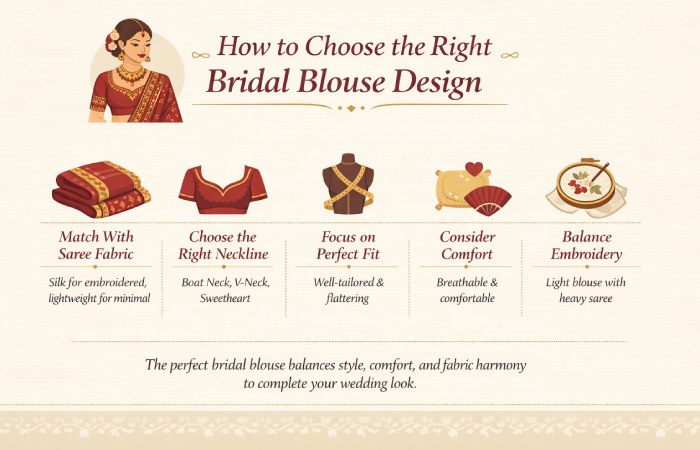
Selecting the right blouse requires balancing style, comfort, and body proportions.
Consider Your Saree Fabric
Heavy sarees like silk work best with structured embroidered blouses, while lightweight fabrics pair well with minimal or contemporary designs.
Match Jewelry With Neckline
For example:
- Chokers pair well with boat neck or high neck blouses
- Long necklaces complement deep neck blouses
Focus on Fit
A bridal blouse should fit perfectly because:
- The saree drape depends on it
- Ill-fitting blouses affect posture and comfort
Professional tailoring is essential.
Latest Bridal Blouse Design Trends
Bridal fashion trends continue to evolve each year.
- Statement Back Designs: Deep backs with tassels, bows, or embroidery are trending.
- Velvet Bridal Blouses: Velvet fabrics are popular for winter weddings and royal aesthetics.
- Pearl and Crystal Embellishments: Luxury bridal wear increasingly uses pearls instead of heavy stones for subtle elegance.
- Detachable Sleeves: Convertible blouses allow brides to switch styles between the ceremony and reception.
Bridal Blouse Fabric Options
The fabric used in a blouse affects both comfort and appearance.
| Fabric | Benefits |
| Silk | Traditional bridal elegance |
| Velvet | Rich, royal look |
| Net | Sheer modern style |
| Brocade | Structured and luxurious |
| Satin | Smooth and contemporary |
Choosing a fabric that complements the saree ensures visual harmony in the bridal outfit.
Common Bridal Blouse Design Mistakes
Many brides focus only on aesthetics and overlook practical details.
| Mistake | Why It Happens | Solution |
| Choosing trend over comfort | Fashion pressure | Focus on fit |
| Poor tailoring | Rushed stitching | Schedule fittings |
| Over-embellishment | Matching heavy sarees | Balance design |
Expert Styling Tips for Bridal Blouse Designs
Professional stylists recommend:
- Designing the blouse before finalizing the jewelry
- Keeping a balance between saree embroidery and blouse work
- Testing the blouse with a trial drape session
These steps help ensure the bridal look appears cohesive and comfortable.
Customer Reviews and Feedback
Real user experiences provide insight into bridal blouse shopping.
From wedding communities online: “Many boutiques that make bridal blouses offer hand embroidery designs.”
Another user noted: “Such blouses are available on Etsy… at varying costs and quality.”
Common feedback from brides includes:
| Positive Feedback | Negative Feedback |
| Custom fit enhances look | Tailoring delays |
| Unique embroidery designs | High designer prices |
| Better saree pairing | Multiple fittings required |
Final Thoughts
A bridal blouse is not just a supporting piece—it is a central design element of the bridal outfit. The right blouse design can enhance posture, highlight jewelry, and add personality to the saree.
Whether choosing a traditional embroidered blouse, a modern corset design, or a trendy cape style, brides should prioritize fit, fabric, and personal comfort alongside aesthetics.
When thoughtfully designed, a bridal blouse becomes a timeless part of wedding fashion, elevating the entire bridal ensemble.