

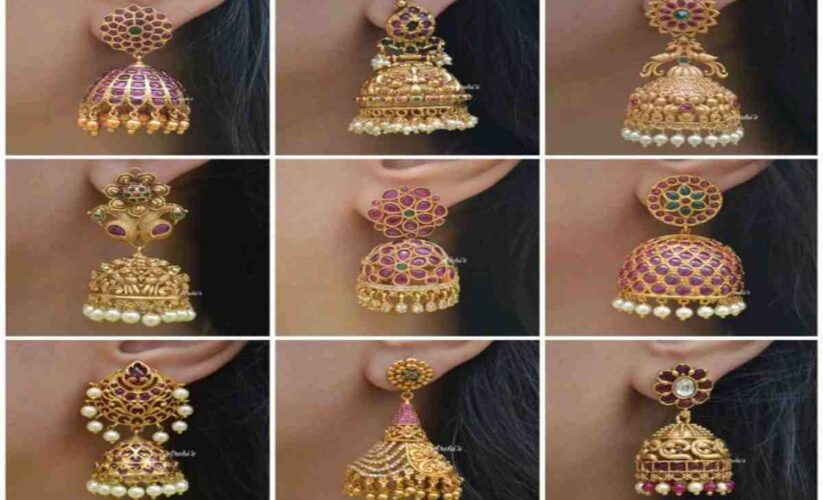
Jhumki Earrings New Traditional Gold Jhumka Design Ideas

Jhumki earrings are traditional bell-shaped Indian earrings known for their dome structure, dangling beads, and intricate gold craftsmanship. Modern new-traditional gold jhumka designs combine temple jewelry, antique finishes, lightweight alloys, and gemstone settings, making them suitable for weddings, festivals, and everyday wear.
What Are Jhumki Earrings?
Jhumki earrings are one of the most iconic forms of Indian jewelry, recognizable by their bell-shaped dome (jhumka) and decorative hanging elements.
They originated centuries ago in South Indian temple jewelry traditions, where artisans crafted them using gold, pearls, and gemstones.
Over time, jhumkis evolved into:
- Bridal jewelry pieces
- Classical dance accessories
- Every day, ethnic fashion items
- Designer luxury ornaments
Today, jewelry designers are reinventing them with lighter frames, modern motifs, and fusion styles.
Price Ranges
The newest designs combine traditional craftsmanship with modern lightweight structures, making them more wearable while preserving cultural heritage.
| Category | Price Range (India) | Material |
| Fashion Jhumki | ₹200 – ₹1,500 | Alloy/imitation |
| Silver Jhumki | ₹800 – ₹5,000 | Sterling silver |
| Gold Jhumka (Lightweight) | ₹10,000 – ₹35,000 | 18k–22k gold |
| Bridal Gold Jhumka | ₹40,000 – ₹2,50,000+ | 22k gold with stones |
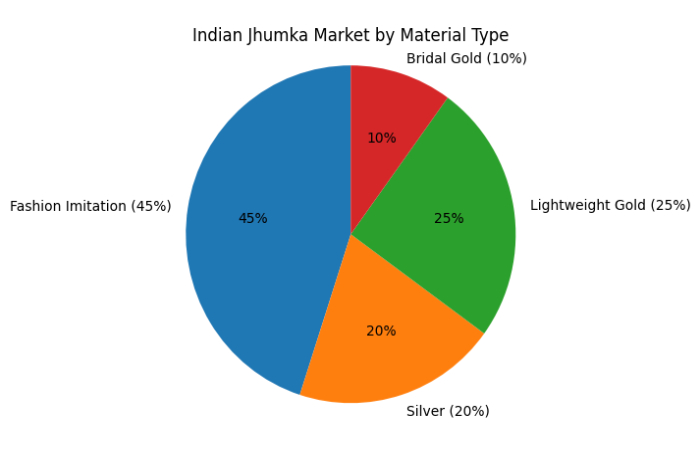
Indian Jhumka Market By Material Type
Popular Jhumka Designs and Their Prices
| Jhumka Design | Typical Price Range |
| Temple Jhumka | ₹30,000 – ₹1,50,000 |
| Kundan Jhumka | ₹5,000 – ₹80,000 |
| Pearl Jhumka | ₹1,000 – ₹1,50,000 |
| Chandbali Jhumka | ₹800 – ₹1,80,000 |
| Antique Gold Jhumka | ₹20,000 – ₹1,20,000 |
| Meenakari Jhumka | ₹2,000 – ₹60,000 |
| Peacock Design Jhumka | ₹15,000 – ₹2,00,000 |
| Lightweight Gold Jhumka | ₹10,000 – ₹35,000 |
| Bridal Heavy Jhumka | ₹40,000 – ₹2,50,000+ |
| Fashion / Imitation Jhumka | ₹200 – ₹1,500 |
Where to Buy Authentic Gold Jhumka Earrings Offline
| Jewelry Brand / Store | Presence | Type of Jhumka Designs | Gold Purity Available | Approx Price Range | Why Buyers Trust It |
| Tanishq | 350+ stores across India | Temple, bridal, antique jhumkas | 18K, 22K | ₹20,000 – ₹2,00,000+ | BIS-hallmarked gold, strong quality control |
| Malabar Gold & Diamonds | 300+ stores globally | South Indian temple jhumkas | 18K, 22K | ₹25,000 – ₹3,00,000 | Large collection of traditional designs |
| Kalyan Jewellers | 150+ stores | Bridal and traditional gold jhumkas | 22K | ₹30,000 – ₹2,50,000 | Trusted Indian family jewelry brand |
| Joyalukkas | Stores across India & the Middle East | Traditional, gemstone jhumkas | 18K, 22K | ₹20,000 – ₹2,20,000 | Wide bridal jewelry selection |
| PC Jeweller | 80+ stores | Lightweight and designer jhumkas | 18K, 22K | ₹15,000 – ₹1,50,000 | Certified gold and transparent pricing |
Buying offline lets you check weight, craftsmanship, and comfort before purchasing, which many buyers prefer for high-value gold jewelry.
Where to Buy Authentic Gold Jhumka Earrings Online
| Online Store | Type of Jhumka Designs | Gold Purity Options | Approx Price Range | Key Features |
| CaratLane | Lightweight modern jhumkas | 14K, 18K | ₹10,000 – ₹80,000 | Try-at-home service and easy returns |
| BlueStone | Contemporary and gemstone jhumkas | 14K, 18K | ₹12,000 – ₹1,20,000 | Customizable jewelry designs |
| Candere | Designer gold jhumkis | 14K, 18K, 22K | ₹15,000 – ₹1,00,000 | Online-focused jewelry marketplace |
| Amazon | Multiple sellers offering gold jhumkas | Varies by seller | ₹5,000 – ₹80,000+ | Large variety and customer reviews |
| Flipkart | Budget to premium jhumka designs | Varies | ₹3,000 – ₹70,000+ | Wide product selection |
Important online buying checks
- Look for the BIS hallmark certification
- Verify the gold weight and the making charges
- Check the return and exchange policy
- Read customer reviews and ratings
Structure of a Classic Jhumka Design
Understanding the structure helps buyers recognize quality craftsmanship.
| Component | Description | Purpose |
| Stud / Top | Floral or circular element attached to the ear | Holds the earring |
| Dome (Jhumka) | Bell-shaped hollow structure | Core design element |
| Engraving | Carved patterns, filigree, or temple motifs | Adds visual depth |
| Hanging Beads | Pearls, gold beads, or stones | Creates movement |
| Hook / Screw | Closure mechanism | Secure wearing |
Professional jewelers often judge quality based on dome symmetry, detailing depth, and bead finishing.
Traditional Gold Jhumka Designs – Trending in 2025–2026
Jewelry trends evolve slowly, but several new variations of traditional gold jhumka designs have gained popularity recently.
- Temple Style Jhumka
Inspired by South Indian temple jewelry.
Features:
- Goddess motifs
- Lakshmi carvings
- Pearl clusters
Best for:
- Weddings
- Bharatanatyam dance jewelry
- Bridal sets
Typical price range:
₹30,000 – ₹1,80,000 depending on gold weight.
2. Antique Finish Gold Jhumka
These imitate the look of century-old jewelry pieces.
Key characteristics:
- Oxidized gold tone
- Dark antique texture
- Hand-carved patterns
| Feature | Advantage |
| Antique finish | Vintage appearance |
| Matte texture | Elegant aesthetic |
| Detailed carving | High craftsmanship value |
These are extremely popular in heritage bridal collections.
3. Lightweight Daily Wear Jhumka
Modern jewelers are responding to the demand for comfort by designing lightweight gold jhumkas.
Typical weight:
| Weight | Price Range |
| 2–3 grams | ₹10,000 – ₹18,000 |
| 4–6 grams | ₹18,000 – ₹35,000 |
Advantages:
- Comfortable for long wear
- Lower gold cost
- Suitable for office or casual events
4. Kundan Jhumka Designs
These combine gold with Kundan gemstone settings.
Common stones used:
- Ruby
- Emerald
- Polki diamonds
Best occasions:
- Wedding ceremonies
- Engagement functions
- Festivals
These pieces often become family heirloom jewelry.
5. Pearl Layer Jhumka
Pearl jhumkis are one of the most elegant variations.
Design elements include:
- Multiple pearl strings
- Dome with gold lattice
- Traditional Mughal patterns
These are particularly popular in the jewelry markets of Hyderabad, Rajasthan, and Lucknow.
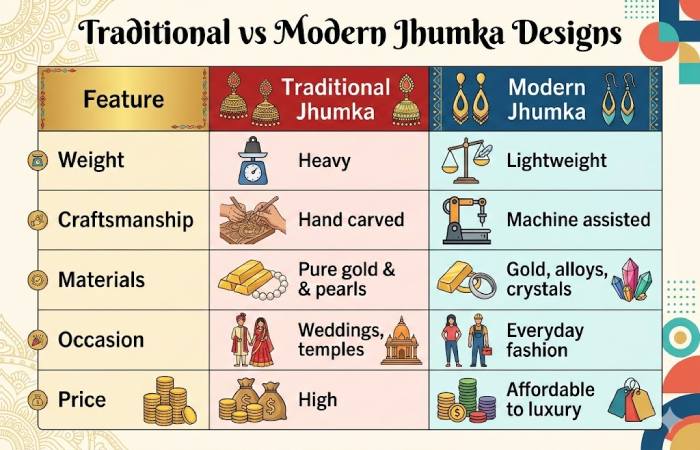
Traditional vs Modern Jhumka Designs
Traditional jhumka designs are usually heavier and handcrafted with pure gold, pearls, and intricate detailing, making them ideal for weddings, festivals, and cultural occasions. In contrast, modern jhumka designs are lightweight, often machine-assisted, and may use gold, alloys, or crystals, making them more suitable for everyday fashion and available in a wider range of prices.
| Feature | Traditional Jhumka | Modern Jhumka |
| Weight | Heavy | Lightweight |
| Craftsmanship | Hand carved | Machine assisted |
| Materials | Pure gold & pearls | Gold, alloys, crystals |
| Occasion | Weddings, temples | Everyday fashion |
| Price | High | Affordable to luxury |
Modern designs aim to balance heritage aesthetics with daily usability. Modern jewelry styling also allows more experimentation with combinations such as gold and silver, following the growing fall jewelry trend of mixing metals.
Popular Jhumka Materials Compared
Fashion buyers often start with imitation jhumkis before investing in gold versions. For those who like combining traditional jewelry with symbolic accessories, a nazar bracelet can be paired with jhumkas for a layered ethnic look.
| Material | Durability | Price | Best For |
| Gold | Very high | Expensive | Bridal jewelry |
| Silver | High | Medium | Festive wear |
| Imitation alloy | Medium | Cheap | Fashion styling |
| Temple gold-plated | Medium-high | Moderate | Traditional outfits |
How to Choose the Right Jhumki Earrings
| Category | Type | Recommended Jhumka Style |
| Face Shape | Round | Long layered jhumkas |
| Oval | Almost all jhumka styles | |
| Square | Soft dome jhumkis | |
| Heart | Pearl jhumka designs | |
| Outfit Matching | Saree | Temple jhumka |
| Lehenga | Kundan jhumka | |
| Salwar Suit | Lightweight gold jhumka | |
| Indo-Western | Minimal or modern jhumka | |
| Occasion | Wedding | Heavy gold jhumka |
| Festival | Antique jhumka | |
| Office Wear | Small lightweight jhumka | |
| Party | Stone or pearl jhumka |
For festive occasions, jhumkas can also be coordinated with other statement accessories, including luxury watches for the Christmas season, to create a more polished overall look.
When styling jhumkas for weddings or festive occasions, pairing them with the right necklace can create a balanced jewelry set. Explore these must-have necklace styles for this season for ideas on coordinating different pieces.
For a complete traditional jewelry ensemble, jhumkas can also be coordinated with other accessories such as fancy chandi ki payal new designs, especially with sarees, lehengas, and other ethnic outfits.
For a more contemporary fusion approach, traditional jhumkas can be balanced with modern accessories such as watches. Those interested in luxury timepieces can also explore Rolex models on the Japanese market.
How to Identify Real Gold Jhumkas
Gold Purity Standards: Before buying expensive jewelry, check its authenticity.
| Karat | Gold Content |
| 24K | 99.9% |
| 22K | 91.6% |
| 18K | 75% |
Most traditional jhumka earrings use 22K gold for durability and richness.
According to the Bureau of Indian Standards (BIS), all certified gold jewelry in India must carry a BIS hallmark that verifies the metal’s purity and authenticity. The hallmarking system was introduced to protect consumers and ensure standardized gold quality.
Look for:
- BIS hallmark stamp
- Jeweler certification
- Weight and pricing transparency
Caring for Jhumki Earrings
Proper care can extend jewelry life for decades.

Professional jewelers recommend annual polishing for gold jhumkas.
Pros and Cons of Jhumki Earrings
| Pros | Cons |
| Timeless cultural jewelry | Heavy designs can strain ears. |
| Suitable for many outfits | Gold versions are expensive. |
| Available in many price ranges | Intricate pieces need careful storage. |
Conclusion
Choosing a pair of jhumki earrings is an act of connection—to art, to culture, and to personal style. In a world of fast fashion, they represent enduring value and thoughtful adornment. By understanding their history, respecting their craftsmanship, and making informed choices, you don’t just buy jewelry; you curate a piece of legacy.
Have a specific styling dilemma or a question about an heirloom piece? Share your thoughts in the comments below. As a community of enthusiasts, let’s keep the conversation and tradition thriving.
FAQ: Your Questions, Answered
Q: Are jhumkas too heavy for daily wear?
A: Not necessarily! The market is full of lightweight, mini jhumkas under 5 grams specifically designed for all-day comfort. Look for hollow domes and thinner chains.
Q: Can I wear jhumkas with Western outfits?
A: Absolutely. This is a major 2025 trend. Pair small, geometric gold jhumkas with a crisp white shirt and jeans, or minimalist chandbalis with a little black dress for a stunning fusion look.
Q: Silver jhumkas or gold-plated? What’s better?
A: For long-term value and allergy-free wear, solid silver is better than plated. Gold-plating will wear off. For heirlooms and major investments, solid gold is the standard.
Disclaimer: Gold prices fluctuate daily. The prices mentioned are estimates for educational purposes. Always buy from certified sellers and get a detailed invoice. This article is for informational purposes and does not constitute financial or investment advice.