

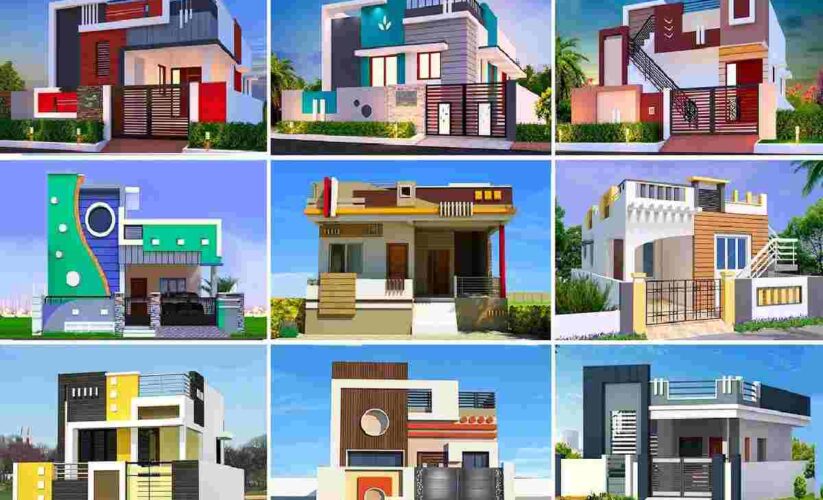
Creative Village House Front Design Images

A village house front design images format refers to architectural drawings that show how a house will appear from a specific angle. The primary cause of the front elevation format in an Indian home is to create a scene picture of the assignment in progress. A village single-floor house front design enhances the classy appeal of the house and its enterprise worth.
The front format of an Indian house requires meticulous preparation. While developing average house front elevation designs, you want not to neglect the region and climate. Designing a village house front elevation is not just about aesthetics—it’s a multi-variable decision involving climate, budget, materials, availability, and maintenance capacity.
According to the World Bank Group Org, well-planned housing design plays a critical role in improving long-term living conditions, durability, and sustainability—making front elevation design an important part of overall home quality.
Why Front Design Matters More in Villages Than Cities
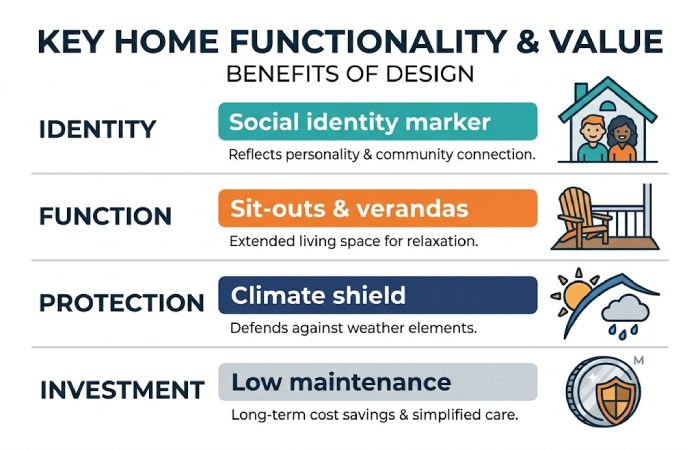
In rural settings, your house front is:
- A social identity marker (guests judge the entire home from it)
- A functional space (sit-outs, verandas, shade areas)
- A climate shield (protects from heat, rain, dust)
- A low-maintenance investment (less frequent renovation vs cities)
Unlike urban homes, village houses must balance aesthetic + utility + cost-efficiency, not just visual appeal.
Reasons Why Village House Front Design Matters
1. Simple Village House Front Design
Simple designs dominate rural housing globally because they optimize cost, durability, and ease of construction. These homes rely on straight geometry, minimal decorative elements, and locally available materials.
From an engineering perspective, simpler designs reduce structural complexity, lowering labor costs and error risk. It is why most first-time homeowners in villages prefer this category.
Specifications
| Element | Specification |
| Floors | Ground floor |
| Roof | Flat RCC or sloped tin |
| Finish | Cement paint/lime wash |
| Front space | Small veranda (optional) |
Cost Breakdown
| Category | Cost per sq ft |
| Basic rural home | ₹1,400 – ₹1,800 |
| Standard finish | ₹1,800 – ₹2,200 |
These ranges align with national averages for residential construction, where costs vary based on material quality and location.
Pros & Cons
| Pros | Cons |
| Lowest cost | Limited visual appeal |
| Easy construction | Basic aesthetics |
| Low maintenance | Less resale value |
Best Alternative
- Add a feature, paint a wall, or design a border instead of a full redesign
2. Modern Village House Front Design
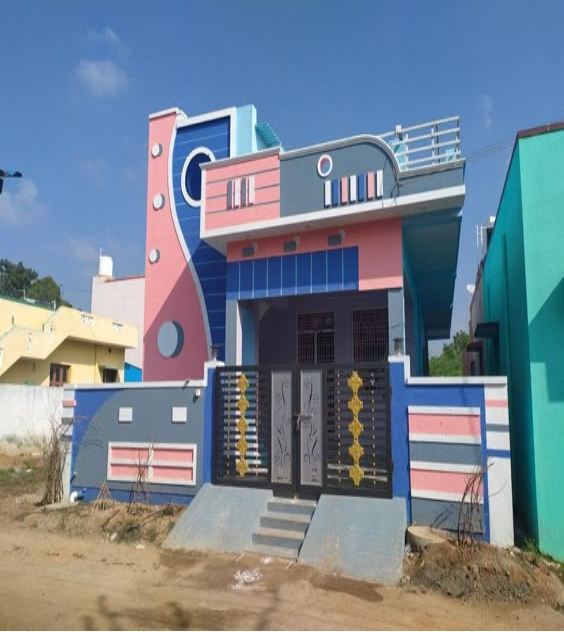
Modern designs are rapidly growing in semi-urban and developed villages due to improvements in aspiration and affordability.
These designs integrate:
- Clean lines
- Feature materials (tiles, stone)
- Lighting design
Specifications
| Feature | Details |
| Design style | Minimal/geometric |
| Materials | Tiles, stone, glass |
| Lighting | LED strips |
| Balcony | Optional |
Cost Comparison
| Component | Traditional | Modern |
| Exterior cost | Low | Medium |
| Maintenance | Medium | Low |
| Appeal | Basic | High |
Cost Breakdown
| Type | Cost per sq ft |
| Semi-modern | ₹1,800 – ₹2,500 |
| Premium modern | ₹2,500 – ₹3,200 |
Modern construction costs fall into the standard-to-premium range, depending on materials and finishes.
Pros & Cons
| Pros | Cons |
| High visual appeal | Higher cost |
| Better resale value | Needs skilled labor |
| Durable materials | Design complexity |
Alternatives
- Hybrid: simple structure + modern facade wall
3. Veranda-Based Village House Front
From a climate engineering perspective, verandas are among the most effective passive cooling strategies globally.
They:
- Reduce direct sunlight
- Protect walls from rain
- Provide usable outdoor space
Specifications
| Element | Ideal Range |
| Depth | 5–8 ft |
| Height | 9–11 ft |
| Pillars | Brick / RCC |
Cost Breakdown
| Component | Cost |
| Pillars | ₹10,000–₹40,000 |
| Roofing | ₹20,000–₹1,00,000 |
| Flooring | ₹50–₹150/sq ft |
Pros & Cons
| Pros | Cons |
| Reduces heat | Adds cost |
| Functional space | Requires maintenance |
| Traditional appeal | Needs space |
Best Use Case
- Hot climates (India, Africa, Southeast Asia)
For homeowners who want to make the veranda or surrounding outdoor area more functional, custom outdoor living designers can provide ideas for seating areas, outdoor layouts, lighting, and other features that complement the home’s front elevation.
4. Traditional Village House Front Design – Eco-Friendly & Cultural
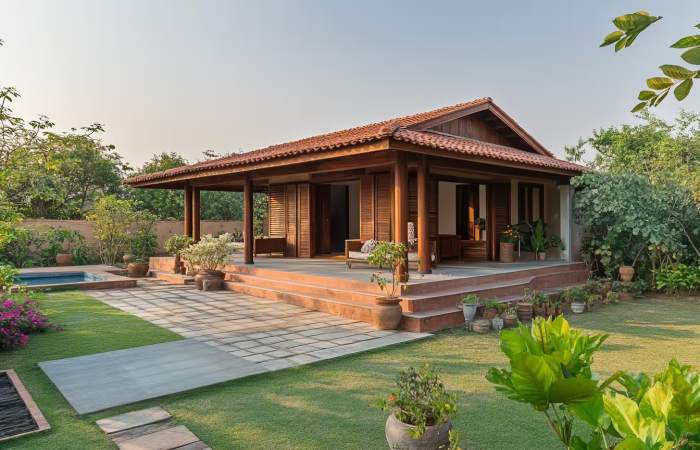
Traditional homes are making a comeback globally due to sustainability trends. Materials such as mud, clay, and terracotta provide natural insulation and a lower environmental impact.
Specifications
| Element | Material |
| Walls | Mud/brick |
| Roof | Tiles/thatch |
| Finish | Natural plaster |
Cost Breakdown
| Type | Cost |
| Mud house | ₹800 – ₹1,500/sq ft |
| Hybrid traditional | ₹1,500 – ₹2,200 |
Pros & Cons
| Pros | Cons |
| Eco-friendly | Lower durability |
| Very low cost | Maintenance needed |
| Naturally cool | Limited modern appeal |
Alternative
- Hybrid: RCC structure + traditional exterior look
5. Small Village House Front Design
Small houses require visual tricks + smart layout planning to look attractive.
| Strategy | Benefit |
| Vertical lines | Makes the house look taller |
| Light colors | Expands visual space |
| Minimal clutter | Clean look |
Cost Breakdown
| Feature | Cost Impact |
| Paint design | Low |
| Tiles | Medium |
| Lighting | Medium |
Pricing Details
| Category | Cost per sq ft |
| Budget | ₹1,400 – ₹1,800 |
| Standard | ₹1,800 – ₹2,500 |
| Premium | ₹2,500 – ₹3,200 |
Cost vs Durability vs Aesthetic
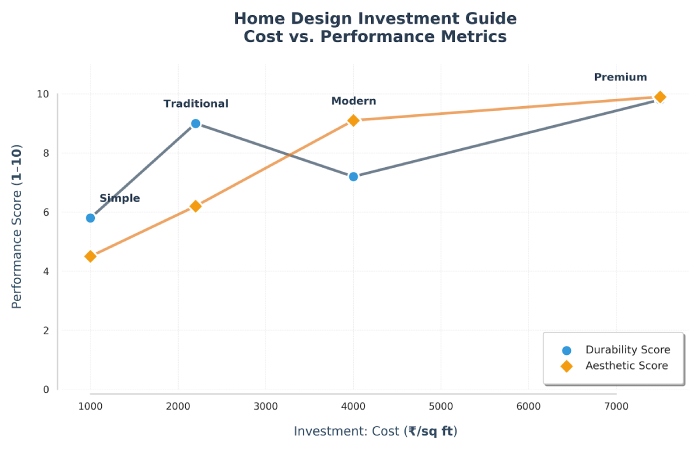
This visual shows how increasing investment in village house front design improves durability and visual appeal, helping homeowners choose the right balance.
Materials & Specifications – What Actually Matters
| Material | Price Range | Where to Buy | Use Case |
| Cement | ₹320–₹450/bag | Local dealers, hardware stores | Structure |
| Steel | ₹60–₹70/kg | Steel suppliers | Reinforcement |
| Paint | ₹20–₹80/sq ft | Paint shops, online | Exterior finish |
| Tiles | ₹40–₹150/sq ft | Tile showrooms | Front elevation |
Material costs account for 50–65% of the total construction budget, making them the biggest cost driver.
Which Design Is Best?
| Criteria | Simple | Modern | Traditional | Veranda |
| Cost | Low | Medium | Low | Medium |
| Durability | Medium | High | Medium | High |
| Aesthetic | Basic | High | Cultural | Balanced |
| Climate suitability | Medium | Medium | High | Very High |
Before finalizing a style, homeowners can also explore a village single floor home front design in 3D to visualize how different facade layouts, materials, colors, windows, and roofing options may look together before construction begins.
Practical Design Mistakes to Avoid
- Overdesigning with small budgets → looks incomplete
- Ignoring climate → leads to cracks, heat issues
- Using too many colors → reduces visual harmony
- Skipping the veranda in hot regions → increases heat
Pro-Level Design Strategy Used by Architects
Instead of choosing randomly, follow this formula:
Front Design = Climate + Budget + Lifestyle + Maintenance Capacity
Lifestyle should also include how the family plans to use the interior spaces of the home. For example, homeowners can consider kitchen design ideas for creating the kitchen of their dreams alongside the front elevation so the exterior and interior layout work together.
Example:
Hot rural Andhra → veranda + light paint + sloped roof
Medium budget → modern front + one feature wall
Low budget → simple + clean geometry
Alternatives You Should Consider
| If You Want | Choose This |
| Low cost + modern look | Hybrid design |
| Eco-friendly | Traditional |
| Luxury look | Modern facade |
| Functional space | Veranda design |
Real-World Review
From real homeowner discussions:
“Material quality matters more than design… cheap materials reduce durability.”
“Rates vary heavily depending on location and finishes.”
These insights align with industry data showing that material selection and finishing quality significantly impact cost and lifespan.
FAQs
- What is the best front design for village houses?
It depends on the budget and climate. Veranda-based designs are best for hot regions, while modern designs suit semi-urban areas.
- What is the cheapest design option?
Simple cement-painted designs are the most affordable.
- Which materials last the longest?
Stone, tiles, and exterior emulsion paints offer the best durability.
- How can I make my house look premium on a budget?
- Add one feature wall.
- Use LED lighting
- Choose 2–3 color combinations.
- Where should I buy materials?
- Local hardware shops (cheaper transport)
- Authorized dealers (quality assurance)
- Online marketplaces (bulk discounts)
Conclusion
While you could have a taste for an excellent style of Village House Front Design Images. It’s critical not to be impulsive, but to verify that the material or style you desire is well matched and suitable for your climate zone.
It’s critical to recognize which orientation your front elevation faces. Using large window sizes on the southern or western faces should result in unwanted heating.